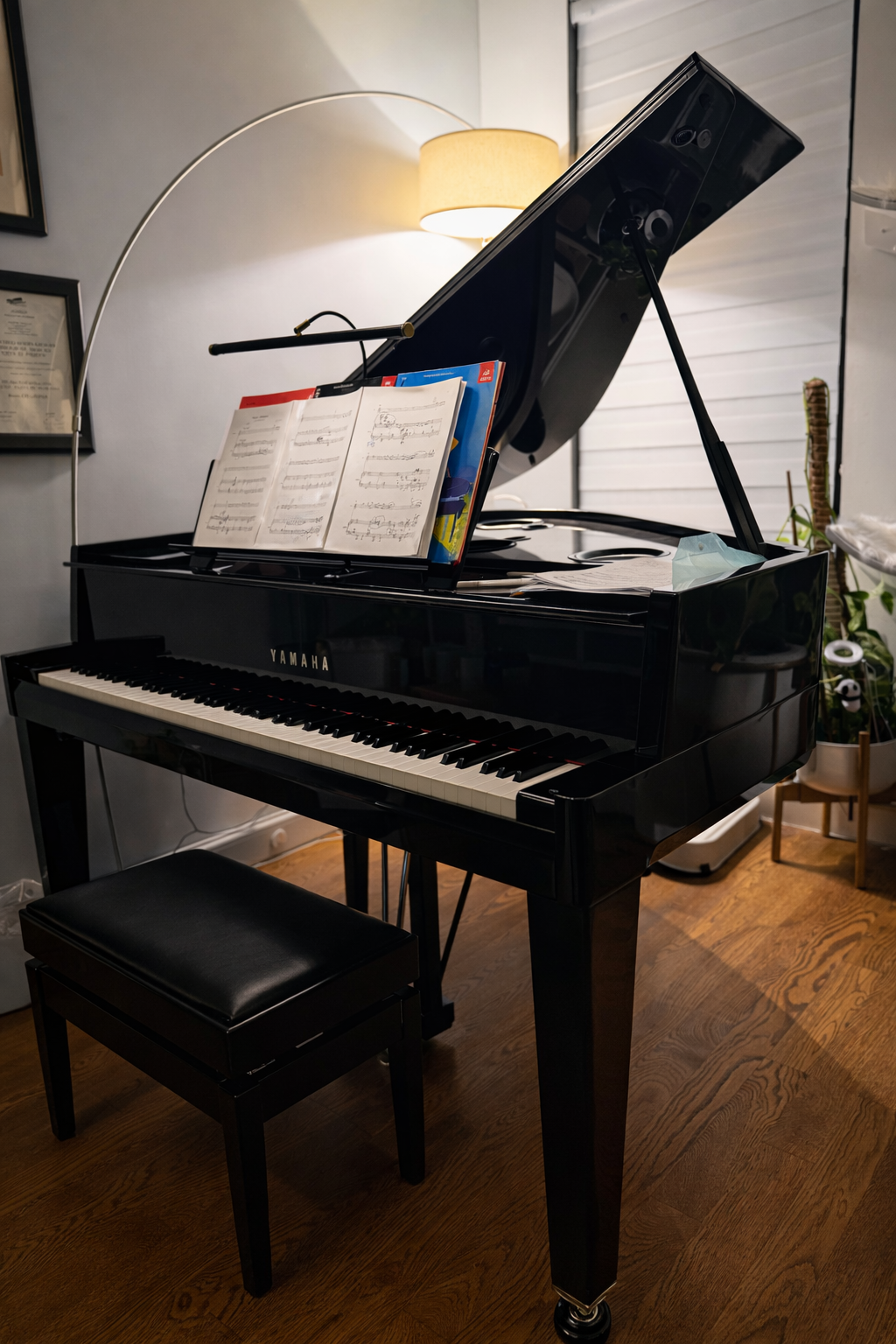
Here in New York City, finding piano lessons that include regular access to a truly responsive instrument can be surprisingly difficult. Space is limited, walls are thin, and many studios understandably choose quieter but often less satisfying solutions: basic digital keyboards or aging uprights that compromise touch, tone, and nuance.
In my studio, I’ve designed a setup that respects the realities of NYC living without sacrificing musical standards. Lessons are taught on a Yamaha AvantGrand N3, a premium hybrid instrument that features true grand piano action, the same mechanical feel you experience on an acoustic grand, paired with the practical benefits of a modern, volume-controlled studio environment.
What this means for students is simple and important:
Proper touch and technique: Grand action supports the kind of weight transfer, control, and articulation that students need to develop reliable technique.
Finger strength and dexterity: The resistance and responsiveness of a real action encourages healthy strength-building and fine motor precision, especially critical for intermediate and advancing students.
Realistic sound and dynamic range: Students can explore color, voicing, and dynamic shaping in a way that more limited instruments don’t allow.
A quiet-friendly studio without compromises: Volume control and headphones, when needed, make it possible to practice and learn with full musical detail while still being considerate of neighbors.
The result is a learning environment where students can grow with confidence, knowing that what they’re practicing will transfer directly to acoustic grands in auditions, competitions, schools, and performance venues.
For more on why hybrid instruments like the AvantGrand exist—and why they’ve become a serious solution for city musicians—you may find this article helpful: New York Times: “No Strings on a Piano, but the Tone Is Grand.”